Airbnb Startup Costs: The Budget Nobody Shows You (and the Reserve)
Fifty nine percent. In the Federal Reserve's latest survey of household finances, that's the share of adults who had at least one major, unexpected expense in the prior twelve months. A car repair. A medical bill. A house or appliance repair. And for the most common ones, the typical bill landed between one thousand and two thousand dollars.
Welcome back to the Cashflow Diary podcast. I'm J. Massey.
Now picture starting an Airbnb. You're not adding one more bill. You're adding a second household's worth of bills, and a second household's worth of surprises.
One of the things people tell us most is that they don't have the money to start, to furnish, or to grow. Most of the time, the budget they've seen online is a furniture list with a total at the bottom.
Today is the budget nobody shows you. Every line, for two paths, owning the place or renting it to rent. Then the first ninety days of cash, and the reserve most hosts forget. Last episode, we put five numbers on the kitchen table. Today we open up the first two, line by line. Two quick notes before we start. This is education, not legal, tax, or financial advice. And any number that isn't from a published source is a made up example, so you can follow the math.
Back in twenty twenty two, I did an episode on furnishing, and I opened it by calling furniture what can be one of the most expensive pieces of getting your short term rental business started. I still think that's true. It's also the reason budgets come out wrong. People price the couch, the beds, and the dishes, and they stop.
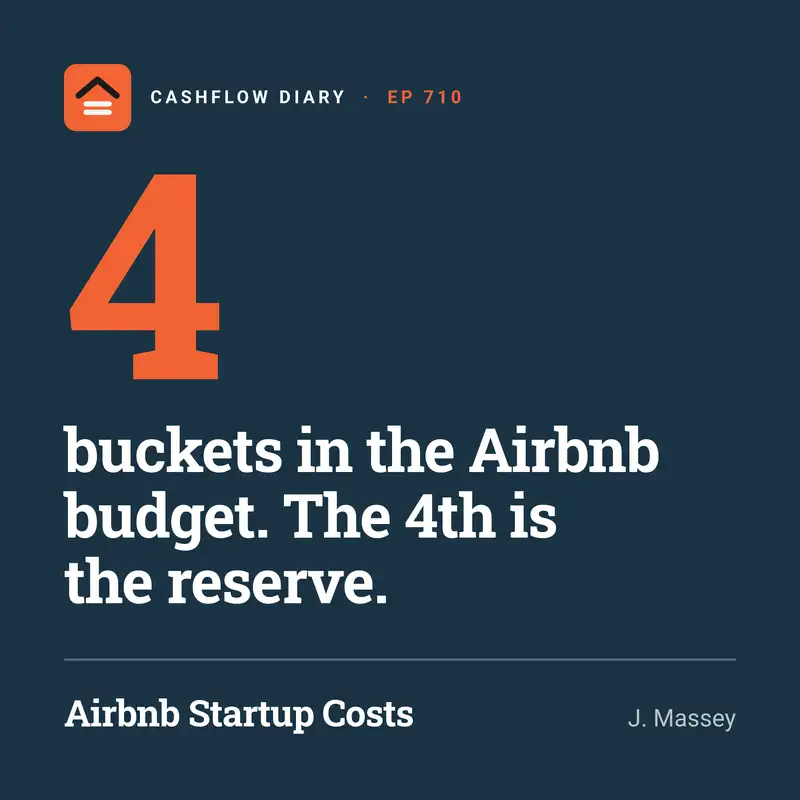
So let's sort every dollar into four buckets.
Bucket one, getting the keys. Bucket two, making the place guest ready. Bucket three, the first ninety days of running costs, before the money comes in on a regular basis. And bucket four, the reserve. That one sits off to the side, and you plan to never touch it.
Grab a sheet of paper and draw two columns. One says own. One says rent to rent. We'll fill in both.
Bucket one. Getting the keys.
If you're buying, this is the down payment, the closing costs, the inspection, and any repairs the place needs before a guest can sleep there.
If you're renting to rent, it's the security deposit, the first month's rent, any application fees, and sometimes the last month's rent too.
Let's use made up numbers. Say you buy a two hundred fifty thousand dollar house with twenty percent down. That's fifty thousand. Add made up closing costs of seven thousand five hundred, and bucket one is fifty seven thousand five hundred dollars.
Now say you rent a place for eighteen hundred a month. A deposit of one month, plus the first month, is three thousand six hundred dollars.
Same street, same size place. Bucket one is where the two columns split the widest.
Bucket two. Guest ready.
Start with what Airbnb asks for. Airbnb calls these the essential amenities, and it strongly encourages hosts to provide them in every listing. Toilet paper. Soap for hands and body. One towel per guest. One pillow per guest. And linens for each guest bed. Airbnb also says that if your listing says you have the essentials and you don't provide them, you may face penalties, up to removal from Airbnb.
Per guest. Your budget counts guests. If your one bedroom sleeps four, that's four towels and four pillows, and you'll want a second set of everything for turnover days.
Airbnb's setup list goes further. Table settings and seating for your maximum number of guests. A coffee maker, pots and pans, and cooking utensils. Window coverings, bedside lamps, an extra blanket, and a fan or space heater. A house manual. Every one of those is a line.
Then safety. Airbnb offers one free combination smoke and carbon monoxide alarm to eligible hosts with an active home listing. One per host. Airbnb also says your local rules may require more than one, so the rest go in your budget. Add the lock or keypad, a first aid kit, photos, and any permit or registration fees your city charges. I can't give you that last number. Your city can.
Made up example for a one bedroom that sleeps four. Furniture, six thousand. Linens and towels, eight hundred. Kitchen, six hundred. Safety and locks, four hundred. Photos, three hundred. Permits and setup, five hundred. Bucket two is eight thousand six hundred dollars, and it's the same in both columns.
There's one line where I'd spend a little more. Furniture.
In that same episode, I said how I buy it. I care that it's durable. I care that it comes with a warranty. I care that if it breaks, I can call her and get it replaced. And I said, I might pay more for my furniture up front for the lower total cost of ownership and operations later.
We learned that the hard way. We used to have glass coffee tables, because they look great. They don't work so well.
There's another way to shrink bucket two. Some operators lease furniture with an option to buy it later. My favorite part of that, from that same episode, is that you can take a limited budget and spread it across more units. You also get to see what holds up in your place before you buy it. Read the lease terms closely, though. Monthly payments are part of bucket three now.
Bucket three. The first ninety days.
This is the bucket people leave off, because they picture the first booking paying the first bill. Look at how the money moves. Airbnb says it typically releases your payout about twenty four hours after your guest checks in. Not when they book. Airbnb's Resource Center also says verifying a new payout method can take up to ten days, unless you use Fast Pay. And a brand new listing has no reviews yet.
The bills start the day you get the keys. Rent or the mortgage. Utilities and internet. Insurance. Cleaning and supplies. Software.
Made up numbers again. Say those come to two thousand three hundred fifty dollars a month. Plan as if the first month brings in nothing and the second month is thin, and set aside two months of costs. That's four thousand seven hundred dollars for bucket three.
If the bookings come faster, good. That money rolls into bucket four.
Bucket four. The reserve.
When I walk through a deal, I subtract the reserve before I decide anything. On one deal breakdown I said, I'm gonna subtract out any reserve requirements that I may want to set up, to make sure that I have enough money. And after everything comes out, you don't want this number to be negative.
So how big? Go back to the Federal Reserve number. Twenty two percent of adults had a major house or appliance repair in the past year, and for the most common surprises, the typical bill ran one to two thousand dollars. A rental adds a second house that can break.
A simple made up rule. One big repair, plus one month of running costs. Two thousand, plus two thousand three hundred fifty. Four thousand three hundred fifty dollars, in its own account.
Keep it apart from your family's rainy day fund. The same survey found fifty five percent of adults had set aside money to cover three months of expenses. If your household is in that group, that money is for your household. The rental gets its own.
Then there's the money that wears out slowly. Forks, glasses, sheets, the toaster.
On an episode about the systems a rental needs, I said, part of my replacement system is building a sinking fund for Prime Day. I'm going to need knives, forks, dishes, cups, and blenders anyway, so I buy them on sale.
A sinking fund is a small amount you put aside every month for things you know will break. Use the reserve for the surprise repair, and the sinking fund for the forks. Pick a made up number, like seventy five dollars a month, and treat it like a bill.
Now add up the columns.
Own. Fifty seven thousand five hundred to get the keys. Eight thousand six hundred to get guest ready. Four thousand seven hundred for the first ninety days, if the monthly costs land close to the same. Four thousand three hundred fifty in reserve. About seventy five thousand one hundred fifty dollars.
Rent to rent. Three thousand six hundred, plus the same eight thousand six hundred, four thousand seven hundred, and four thousand three hundred fifty. Twenty one thousand two hundred fifty dollars.
Years ago I was hours away from removing the final contingencies on a house. It was going to take a hundred thousand dollars to take it over and fix it up, and then I had to furnish it. I sat down to do the math, and I asked myself, do I need to own this? I said, what I need is control. I need the right to use the property the way that I want to use it. That's called a lease. I don't need the deed.
Owning still builds equity, and a lease still ends, still has rent due every month, and still needs a yes. Both columns are real. They ask for very different amounts of cash on day one.
If you rent, Airbnb's own guidance is to read your lease, check with your landlord, and check any HOA or co-op rules before you list. It suggests a rider to the lease that spells out who's responsible for what. Check your city's permit, zoning, and tax rules too. Some buildings are part of Airbnb's Airbnb-friendly program, which lets building management allow hosting under their own rules, and can include a revenue share with the building. A local attorney should read anything before you sign it.
Fifty nine percent of adults had a big surprise bill last year. Your budget should expect one.
Now your homework. Thirty minutes. Take that sheet with two columns. Write the four buckets down the side. Then fill in real numbers from your own town. A real rent, a real furniture quote, your city's real permit fee. The made up numbers from today are only there so you can see the shape.
And remember, a rental business takes work, it takes money, and it can lose money. A budget doesn't guarantee a result. It does show you how much cash each path needs before you sign anything.
If the rent to rent column is the one that fits your cash, the line that's hardest to price is the landlord's yes. We wrote a free playbook on that. Who to ask, what to say when they push back, and a lease checklist to bring to the meeting. Go to cashflowdiary.com/landlord-yes.
Okay, that's it for today. I'm J. Massey. And this has been the Cashflow Diary podcast.
If this helped, rate the show on Apple Podcasts or Spotify. That helps another person find it.
Quick note... this episode was voiced with my licensed AI voice, built from my own recordings.